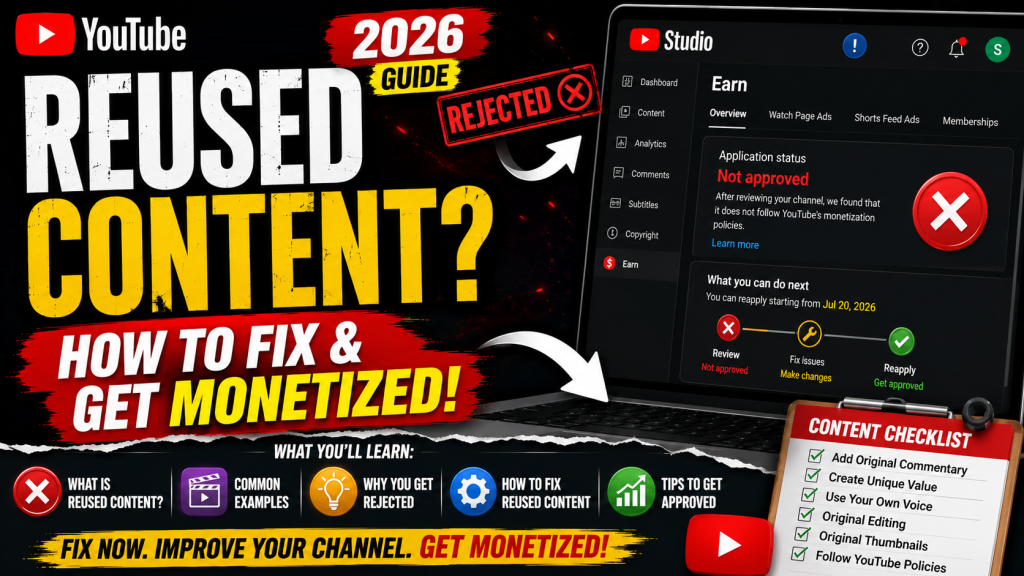
If your YouTube monetization application was rejected due to “Reused Content,” you’re not alone. This is one of the most common reasons creators are denied entry into the YouTube Partner Program (YPP).
Many creators misunderstand what YouTube means by reused content. Simply editing someone else’s videos, adding background music, or changing clips is often not enough to qualify for monetization.
In this guide, you’ll learn what reused content means, examples of content that may trigger a rejection, how YouTube evaluates channels, and the steps you can take to fix your channel and improve your chances of approval.
What Is Reused Content?
According to YouTube, reused content refers to content that doesn’t provide enough original value or meaningful transformation for viewers.
This does not necessarily mean copyright infringement.
Instead, YouTube looks at whether your videos demonstrate significant creativity, commentary, education, analysis, or entertainment beyond the original source.
Reused Content vs Copyright
Many creators confuse these two concepts.
Reused Content
- A monetization policy issue.
- You may own permission to use the content.
- The problem is the lack of original value.
Copyright
- A legal issue.
- You use copyrighted material without permission.
- Can result in copyright claims or strikes.
A video can be free from copyright claims but still be rejected for reused content.
Common Examples of Reused Content
1. Movie Clip Compilations
Uploading movie scenes with little or no commentary.
2. TV Show Clips
Compiling television clips without adding meaningful analysis.
3. TikTok or Instagram Reposts
Downloading videos from other creators and uploading them to YouTube.
4. Meme Compilation Videos
Simply combining memes into one video without original contribution.
5. Viral Videos
Re-uploading trending videos from social media.
6. Sports Highlights
Uploading match highlights without permission or meaningful commentary.
7. Celebrity Videos
Compilation videos with minimal editing.
8. Stock Footage
Using stock footage alone without adding your own creativity or educational value.
9. AI Voice Over Existing Videos
Using AI narration over someone else’s footage without meaningful transformation.
10. Compilation Channels
Channels built entirely around content created by others.
What Content Is Usually Safe?
Original content generally has a much better chance of meeting YouTube’s monetization policies.
Examples include:
- Tutorials
- Reviews
- Educational videos
- Commentary
- Product demonstrations
- Vlogs
- Interviews
- Original animations
- Original music
- Original documentaries
How YouTube Reviews Reused Content
Reviewers may examine:
- Entire channel
- Older videos
- Shorts
- Live streams
- Thumbnails
- Titles
- Descriptions
- Editing style
- Voice-over
- On-screen appearance
- Overall originality
The review considers your channel as a whole rather than a single video.
How to Fix Reused Content
1. Add Original Commentary
Explain, review, teach, or analyze the topic using your own voice and expertise.
2. Show Your Personality
Appear on camera when appropriate or include your own narration to demonstrate originality.
3. Create Original Graphics
Design your own:
- Thumbnails
- Animations
- Charts
- Visual effects
4. Avoid Copying Other Channels
Don’t imitate another creator’s format too closely.
Develop your own style and presentation.
5. Improve Your Editing
Good editing includes:
- Original transitions
- Visual explanations
- Text overlays
- Commentary
- Motion graphics
Editing alone isn’t enough—the video should provide additional value.
6. Create More Original Videos
Publishing more unique content strengthens your overall channel.
Should You Delete Reused Videos?
Not always.
Deleting videos isn’t automatically required.
Instead:
- Review your content carefully.
- Improve videos where possible.
- Remove only content that clearly lacks originality or violates policies.
Focus on improving your channel overall.
Can Shorts Cause Reused Content Issues?
Yes.
Shorts are reviewed just like long-form videos.
Uploading recycled clips from other platforms without meaningful transformation may affect monetization eligibility.
Can AI Videos Be Monetized?
Yes—if they provide genuine value.
AI-generated content should include:
- Original ideas
- Human creativity
- Commentary
- Editing
- Storytelling
- Educational or entertainment value
Simply generating large volumes of low-effort AI content may not meet YouTube’s monetization policies.
Tips to Avoid Reused Content
- Record your own footage.
- Use your own voice.
- Create original thumbnails.
- Add meaningful commentary.
- Teach something new.
- Provide analysis.
- Tell original stories.
- Build your own brand.
- Avoid copying trending videos.
Frequently Asked Questions
Can I monetize compilation videos?
It depends on whether they provide significant original value through commentary, education, or creative transformation.
Can reaction videos be monetized?
Reaction videos may qualify if they include meaningful commentary, analysis, or criticism that adds value beyond the original content.
Is using Creative Commons content always safe?
No. Even if content is available under a Creative Commons license, YouTube may still determine that a channel lacks sufficient original value for monetization.
Will YouTube review my entire channel?
Yes. Reviewers may evaluate your overall channel, including older uploads, when assessing eligibility for the YouTube Partner Program.


Leave a Reply