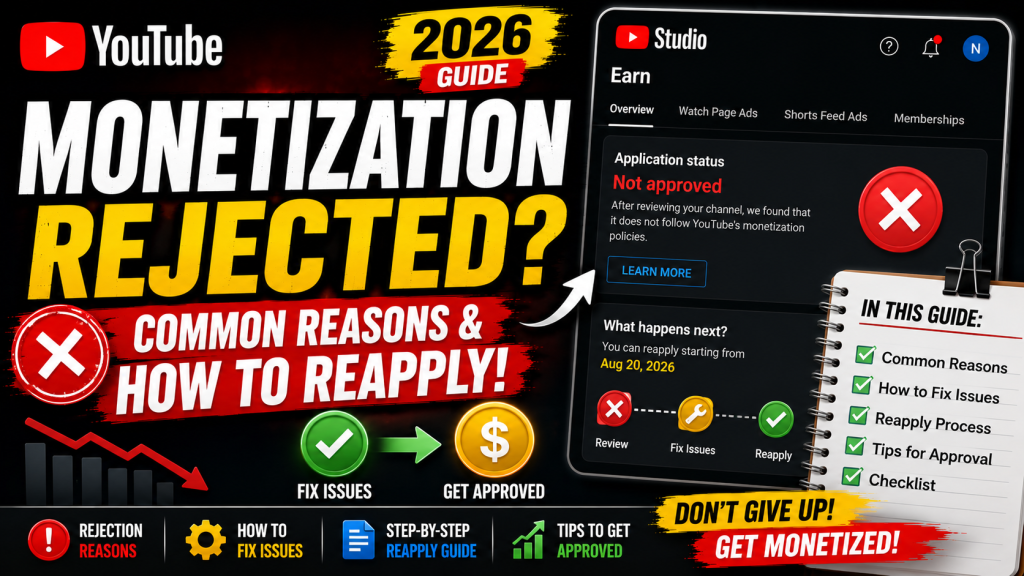
Receiving the email that your YouTube monetization application has been rejected can be frustrating, especially after spending months creating content and meeting the YouTube Partner Program (YPP) eligibility requirements.
However, a rejection doesn’t necessarily mean your channel can never be monetized. In many cases, creators improve their channels, address the issues identified by YouTube, and successfully reapply later.
In this guide, you’ll learn the most common reasons YouTube rejects monetization applications, how to identify the problem, what changes you should make, and how to submit a stronger application the next time.
What Does “YouTube Monetization Rejected” Mean?
When your YouTube Partner Program application is reviewed, YouTube evaluates your entire channel—not just your most recent videos.
The review focuses on whether your channel follows the YouTube Partner Program policies, including:
- Originality of your content
- Community Guidelines compliance
- Copyright compliance
- Advertiser-friendly content
- Authentic audience growth
- Overall value provided to viewers
If your channel doesn’t meet these standards, YouTube may reject your application.
Common Reasons YouTube Rejects Monetization
1. Reused Content
This is one of the most common reasons for rejection.
Examples include:
- Compilations copied from other creators
- Movie or TV clips with little or no added value
- TikTok or Instagram reposts
- Meme compilations
- Music uploads without sufficient original contribution
- Stock footage with minimal editing
Simply editing someone else’s content is not always enough. Your videos should include meaningful original value, such as commentary, education, analysis, storytelling, or creative transformation.
2. Repetitious Content
Repetitious content refers to videos that are highly similar and provide little variation or unique value.
Examples:
- Nearly identical videos uploaded repeatedly
- Automated slideshow videos
- AI-generated videos with minimal human input
- Repeated templates with only small changes
- Mass-produced content offering little originality
Creating diverse, engaging, and original videos helps demonstrate value to viewers.
3. Copyright Issues
Using copyrighted material without permission can negatively affect your application.
Common examples:
- Music
- TV shows
- Movies
- Sports broadcasts
- Anime clips
- Commercial footage
Always ensure you have the appropriate rights or use content that complies with YouTube’s copyright policies.
4. Community Guidelines Violations
Repeated Community Guidelines violations may affect monetization eligibility.
Examples include content involving:
- Harassment
- Hate speech
- Dangerous activities
- Spam
- Misleading practices
Following YouTube’s Community Guidelines is essential for long-term success.
5. Invalid Traffic or Artificial Engagement
YouTube expects channels to grow through genuine viewer interest.
Activities that can create problems include:
- Buying views
- Buying subscribers
- Purchasing watch hours
- Artificial engagement services
- Automated traffic
- Click exchange networks
Building your audience organically is the safest approach.
6. Misleading Metadata
Titles, thumbnails, and descriptions should accurately represent your content.
Avoid:
- Clickbait that doesn’t match the video
- Keyword stuffing
- Misleading thumbnails
- False claims
Honest and descriptive metadata helps build viewer trust.
7. Low-Value Content
Channels with limited originality or little educational, entertaining, or informative value may struggle to qualify for monetization.
Ask yourself:
- Does this content offer something unique?
- Would viewers benefit from watching it?
- Is there clear effort and creativity involved?
How to Find the Real Reason for Rejection
Review:
- The rejection email from YouTube.
- The message in YouTube Studio → Earn.
- Your recent uploads.
- Your older videos.
- Copyright notices.
- Community Guidelines status.
Identifying patterns across your content can help you decide what improvements are needed.
Should You Delete Videos?
Deleting videos is not always the right solution.
Instead:
- Review each video individually.
- Remove or improve content only if it clearly violates policies or lacks original value.
- Focus on raising the overall quality of your channel rather than deleting videos unnecessarily.
Should You Start a New Channel?
Usually, no.
If your existing channel has an engaged audience and valuable original content, improving it is often a better option than starting over.
Creating a new channel doesn’t automatically solve the issues that caused the rejection.
How Long Before You Can Reapply?
If your monetization application is rejected, YouTube generally provides information about when you’re eligible to apply again.
Use this waiting period to:
- Improve your content.
- Remove policy issues where appropriate.
- Publish more original videos.
- Strengthen your channel overall.
How to Reapply for Monetization
Step 1
Open YouTube Studio.
Step 2
Go to Earn.
Step 3
Review the reason for your previous rejection.
Step 4
Make meaningful improvements to your channel.
Step 5
Submit a new application once you’re eligible.
After reapplying, YouTube will review your channel again.
Tips to Increase Your Chances of Approval
- Create original videos.
- Add your own commentary or expertise.
- Use original thumbnails.
- Avoid reused or repetitive content.
- Follow copyright rules.
- Stay within Community Guidelines.
- Grow your audience organically.
- Upload consistently.
- Improve your video quality.
- Build trust with viewers.
Mistakes to Avoid
- Buying subscribers.
- Buying views.
- Reuploading other creators’ videos.
- Using copyrighted music without permission.
- Publishing low-effort AI-generated videos.
- Misleading viewers with clickbait.
- Ignoring YouTube policies.
Frequently Asked Questions
Can I apply again after rejection?
Yes. If you’re eligible to reapply, you can submit another application after making meaningful improvements to your channel.
Does deleting videos guarantee approval?
No. Approval depends on your channel’s overall compliance with YouTube’s monetization policies, not simply the number of videos you delete.
Can reused content ever be monetized?
It depends on whether the content includes sufficient original value and complies with YouTube’s monetization policies.
Will YouTube review my entire channel again?
Yes. During a new application, YouTube may review your channel again to determine whether it now meets the YouTube Partner Program requirements.
Final Thoughts
A monetization rejection isn’t the end of your YouTube journey. Many creators are approved after improving their content and reapplying. Focus on creating original, high-quality videos, following YouTube’s policies, and growing your audience naturally. Over time, these improvements can strengthen your channel and increase your chances of being accepted into the YouTube Partner Program.


Leave a Reply